Monroe County Dog Registration Information
Service Dogs and Emotional Support Animals in Monroe, Florida
If you’re asking where do I register my dog in Monroe County, Florida for my service dog or emotional support dog, the answer usually comes down to two separate things: (1) getting the correct dog license in Monroe County, Florida (local pet licensing/rabies tag requirements) and (2) understanding the legal rules that apply to service dogs versus emotional support animals.
In Monroe County, pet licensing and rabies tag enforcement are handled locally through county animal control and the county-supported shelters that issue county license tags. Service dog or ESA “registration” is often misunderstood—there is typically no official government registry you must join just because your dog is a service dog or emotional support dog. What you usually must do is keep your dog properly vaccinated (especially rabies) and follow local licensing rules.
Where to Register or License Your Dog in Monroe County, Florida
Because licensing is handled locally, the most direct “where to register a dog in Monroe County, Florida” answer is to contact the official Monroe County Animal Control program and/or the county-supported shelters that issue animal control dog license Monroe County, Florida tags. Monroe County notes that it funds three shelters (run by contractors) that provide animal control services and are responsible for ensuring pets are vaccinated for rabies and have current county license tags.
County Animal Control (Program Page / General County Contact)
| Office name | Monroe County Animal Control (Monroe County, FL) |
|---|---|
| Address | 1100 Simonton Street |
| City/State/ZIP | Key West, FL 33040 |
| Phone | 305-294-4641 (Main Number) |
| Not listed on the Animal Control page | |
| Office hours | Not listed |
Tip: Ask to be routed to animal control licensing/rabies tag questions, or to the shelter location closest to you for county license tags.
Florida Keys SPCA (Key West Shelter)
| Office name | Florida Keys SPCA (Key West) |
|---|---|
| Street address | 5711 College Road |
| City/State/ZIP | Key West, FL 33040 |
| Phone | 305-294-4857 |
| After-hours | 305-304-5964 |
| Not listed on the county Animal Control page | |
| Office hours | Not listed on the county Animal Control page |
This is one of the county-supported shelters referenced by Monroe County Animal Control for licensing and rabies tag compliance.
Florida Keys SPCA (Marathon Shelter)
| Office name | Florida Keys SPCA (Marathon) |
|---|---|
| Street address | 10550 Aviation Boulevard |
| City/State/ZIP | Marathon, FL 33050 |
| Phone | 305-743-4800 |
| After-hours | 305-394-7806 |
| Not listed on the county Animal Control page | |
| Office hours | Not listed on the county Animal Control page |
Ask whether your license tag and paperwork can be issued/renewed through the Marathon shelter.
Humane Animal Care Coalition (Key Largo Shelter)
| Office name | Humane Animal Care Coalition (Key Largo) |
|---|---|
| Street address | 105951 Overseas Highway |
| City/State/ZIP | Key Largo, FL 33037 |
| Phone | 305-451-0088 |
| Not listed on the county Animal Control page | |
| Office hours | Not listed on the county Animal Control page |
This is the Upper Keys shelter referenced by Monroe County Animal Control for countywide animal services support.
Florida Department of Health in Monroe County (Rabies / Public Health Questions)
| Office name | Florida Department of Health in Monroe County |
|---|---|
| Street address | Not listed on the referenced contact page |
| City/State/ZIP | Monroe County, FL (see DOH-Monroe locations directory) |
| Phone | 305-293-7500 |
| Not listed on the referenced contact page | |
| Office hours | Not listed |
This office is typically a good starting point for public health guidance (for example, animal bites/rabies exposure), while the county shelters handle pet license tags.
Overview of Dog Licensing in Monroe County, Florida
Who handles dog licensing in Monroe County?
Monroe County Animal Control is responsible for enforcing state and county animal control regulations, and the county funds three animal control shelters operated by contractors that provide services countywide. These shelters are also responsible for ensuring that dogs (as well as cats and ferrets) are properly vaccinated for rabies and have valid, up-to-date county license tags and certificates. In practical terms, when you’re looking for a dog license in Monroe County, Florida, you’ll typically work through the county-supported shelter closest to you (Key West, Marathon, or Key Largo).
What is a “dog license” and why does it matter?
A dog license (often issued as a county tag) is a local registration showing the dog is licensed in the county and usually tied to rabies vaccination compliance. Licensing can help if your pet is found, can support public health tracking, and may be required to avoid citations or higher impound fees. If you are specifically searching for animal control dog license Monroe County, Florida information, the county animal control program page is a strong starting point, and the county-supported shelters are the main points of contact.
Typical licensing terms and fees
Monroe County lists one-year and three-year pet license fees that vary depending on whether the dog is altered (spayed/neutered) or unaltered, along with replacement tag fees. The county also describes certain pick-up/impound fees and notes that some fees can be doubled if an animal picked up was not vaccinated for rabies. Fees and discounts may change over time, so confirm current pricing when you apply or renew.
Rabies vaccination requirements (Florida law)
Florida law requires that dogs, cats, and ferrets 4 months of age or older be vaccinated against rabies by a licensed veterinarian using an approved vaccine, with limited medical exemptions when a veterinarian certifies vaccination would endanger the animal’s health. Even if you are registering a service dog or an emotional support dog, rabies vaccination rules and local licensing rules still apply.
How Dog Licensing Works Locally in Monroe County, Florida
Step-by-step: where to register a dog in Monroe County, Florida
- Confirm rabies vaccination is current. Ask your veterinarian for a rabies certificate and keep a copy available. If your dog has a medical exemption, request the written certification from the veterinarian.
- Choose the shelter/office closest to you. Monroe County funds three animal control shelters (Key West, Marathon, and Key Largo) that can direct you to dog licensing and tag requirements.
- Ask for a county license tag and certificate. When you call, use clear language: “I need a dog license in Monroe County, Florida,” or “I’m trying to renew my county rabies tag / pet license.”
- Bring required documents and payment. Requirements can vary; most owners should expect to show rabies proof and identification, and possibly proof of residency for county licensing.
- Keep the tag current and accessible. Attach tags to a secure collar/harness as instructed, and store the paperwork in your home records (and a digital copy, if possible).
Local vs. federal: what “registration” really means for service dogs and ESAs
People often search for “registration” because they want their dog recognized as a service dog or emotional support dog. Locally, “registration” usually means licensing—your county pet license and rabies compliance. Federally, service animal status is about training and tasks, not a county-issued “service dog license.” For emotional support animals, recognition generally shows up in housing situations as a reasonable accommodation request, not a public-access license.
Leash and public control rules still apply
Monroe County’s animal control information states that animals in public places must be on a leash, and that “effective voice command” is not an acceptable substitute in public places. Even with a trained service dog, you should plan for compliant control methods (leash, harness, or tether), unless a disability-related reason makes that impossible—in which case the handler must still maintain control through voice, signal, or other effective means where applicable.
Service Dog Laws in Monroe County, Florida
Service dog definition (public access)
Under federal ADA rules for public places and many government services, a service animal is generally a dog that is individually trained to do work or perform tasks directly related to a person’s disability. The key point: the dog must be trained to perform specific work or tasks—comfort alone does not qualify.
Do you have to “register” a service dog with the county?
In most cases, no special county registry is required for a dog to be a service dog under federal public-access rules. However, your dog can still be subject to local animal laws: a current rabies vaccination, compliance with local licensing, and adherence to local safety rules. So if you’re asking “where do I register my dog in Monroe County, Florida for my service dog,” the practical answer is: license your dog like any other dog, through the county-supported animal control shelters, and keep your training and handling standards consistent with service dog expectations.
What businesses can ask (and what they can’t)
In public settings covered by the ADA, staff are generally limited to asking two questions when the need for a service dog isn’t obvious: (1) whether the dog is required because of a disability, and (2) what work or task the dog has been trained to perform. They generally cannot demand documentation, require an ID card, or ask about the nature of your disability.
Service dog tags, vests, and IDs
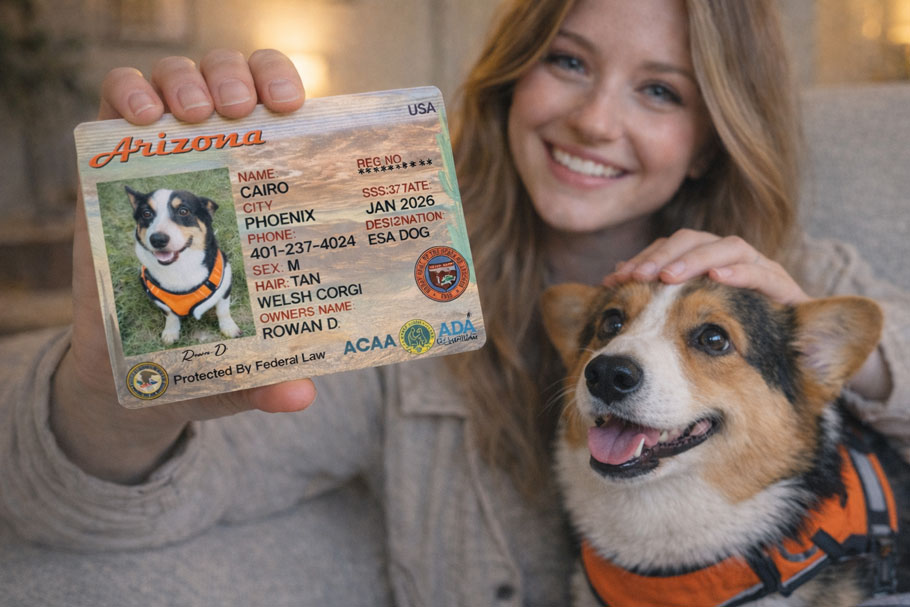
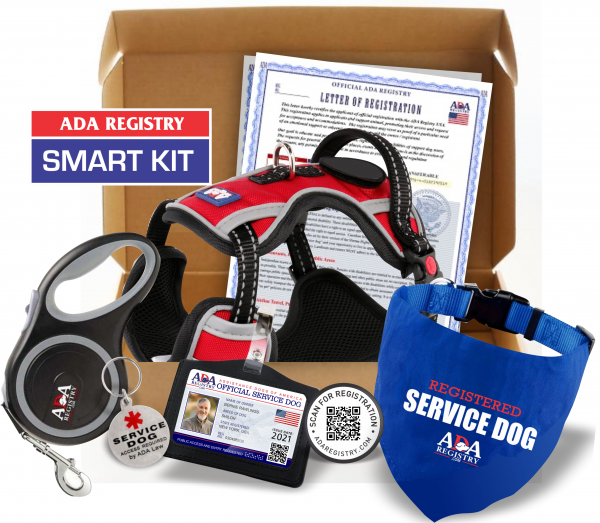
A vest or tag can reduce confusion, but it is not the legal basis for service dog status. Be cautious: many “official-looking” service dog registrations are not government-issued and don’t override local licensing rules or business policies that follow ADA standards.
Emotional Support Animal Rules in Monroe County, Florida
What an emotional support animal (ESA) is—and isn’t
An emotional support animal (ESA) is generally an animal that provides emotional support that alleviates one or more identified effects of a person’s disability. ESAs can be relevant under fair housing rules as an “assistance animal” for reasonable accommodations. However, ESAs do not automatically have public-access rights to restaurants, stores, or other public accommodations in the same way trained service dogs do.
Housing: reasonable accommodations and documentation
In housing situations, a housing provider may be required to consider a reasonable accommodation request involving an assistance animal (including an ESA) when the legal criteria are met. Practically, this often means you may need reliable documentation supporting (1) that you have a disability (as defined by applicable law) and (2) that the animal provides disability-related assistance or emotional support that helps with the disability. Policies vary by housing type and circumstances, so it’s best to prepare your paperwork early and communicate in writing.
County licensing still applies to ESAs
Even if your dog is an ESA, you still generally need to follow the same local rules for rabies vaccination and the dog license in Monroe County, Florida. If you’re searching “where to register a dog in Monroe County, Florida” for an ESA, the correct path is still local pet licensing through Monroe County’s animal control shelter network.
Avoid confusion: ESA vs. therapy dog
A therapy dog typically visits facilities (like hospitals or schools) as part of a program and is not the same as a service dog or an ESA. Therapy animals generally do not have the same housing or public-access rights as service animals under the ADA, and they are not a substitute for local licensing.
Frequently Asked Questions
Register A Dog In Other Florida Counties
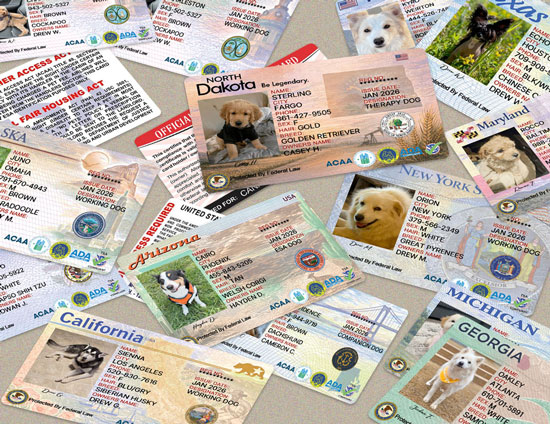
Select your county below to get started with your dog’s ID card. Requirements and license designs may vary by county, so choose your location to see the correct options and complete your pup’s registration.
- Alachua County Dog Registration
- Baker County Dog Registration
- Bay County Dog Registration
- Bradford County Dog Registration
- Brevard County Dog Registration
- Broward County Dog Registration
- Calhoun County Dog Registration
- Charlotte County Dog Registration
- Citrus County Dog Registration
- City of Jacksonville County Dog Registration
- Clay County Dog Registration
- Collier County Dog Registration
- Columbia County Dog Registration
- DeSoto County Dog Registration
- Dixie County Dog Registration
- Duval County Dog Registration
- Escambia County Dog Registration
- Flagler County Dog Registration
- Franklin County Dog Registration
- Gadsden County Dog Registration
- Gilchrist County Dog Registration
- Glades County Dog Registration
- Gulf County Dog Registration
- Hamilton County Dog Registration
- Hardee County Dog Registration
- Hendry County Dog Registration
- Hernando County Dog Registration
- Highlands County Dog Registration
- Hillsborough County Dog Registration
- Holmes County Dog Registration
- Indian River County Dog Registration
- Jackson County Dog Registration
- Jefferson County Dog Registration
- Lafayette County Dog Registration
- Lake County Dog Registration
- Lee County Dog Registration
- Leon County Dog Registration
- Levy County Dog Registration
- Liberty County Dog Registration
- Madison County Dog Registration
- Manatee County Dog Registration
- Marion County Dog Registration
- Martin County Dog Registration
- Miami-Dade County Dog Registration
- Nassau County Dog Registration
- Okaloosa County Dog Registration
- Okeechobee County Dog Registration
- Orange County Dog Registration
- Osecola County Dog Registration
- Palm Beach County Dog Registration
- Pasco County Dog Registration
- Pinellas County Dog Registration
- Polk County Dog Registration
- Putnam County Dog Registration
- Santa Rosa County Dog Registration
- Sarasota County Dog Registration
- Seminole County Dog Registration
- St. Johns County Dog Registration
- St. Lucie County Dog Registration
- Sumter County Dog Registration
- Suwannee County Dog Registration
- Taylor County Dog Registration
- Union County Dog Registration
- Volusia County Dog Registration
- Wakulla County Dog Registration
- Walton County Dog Registration
- Washington County Dog Registration